
Test the Misfire Before Paying for Honda Parts
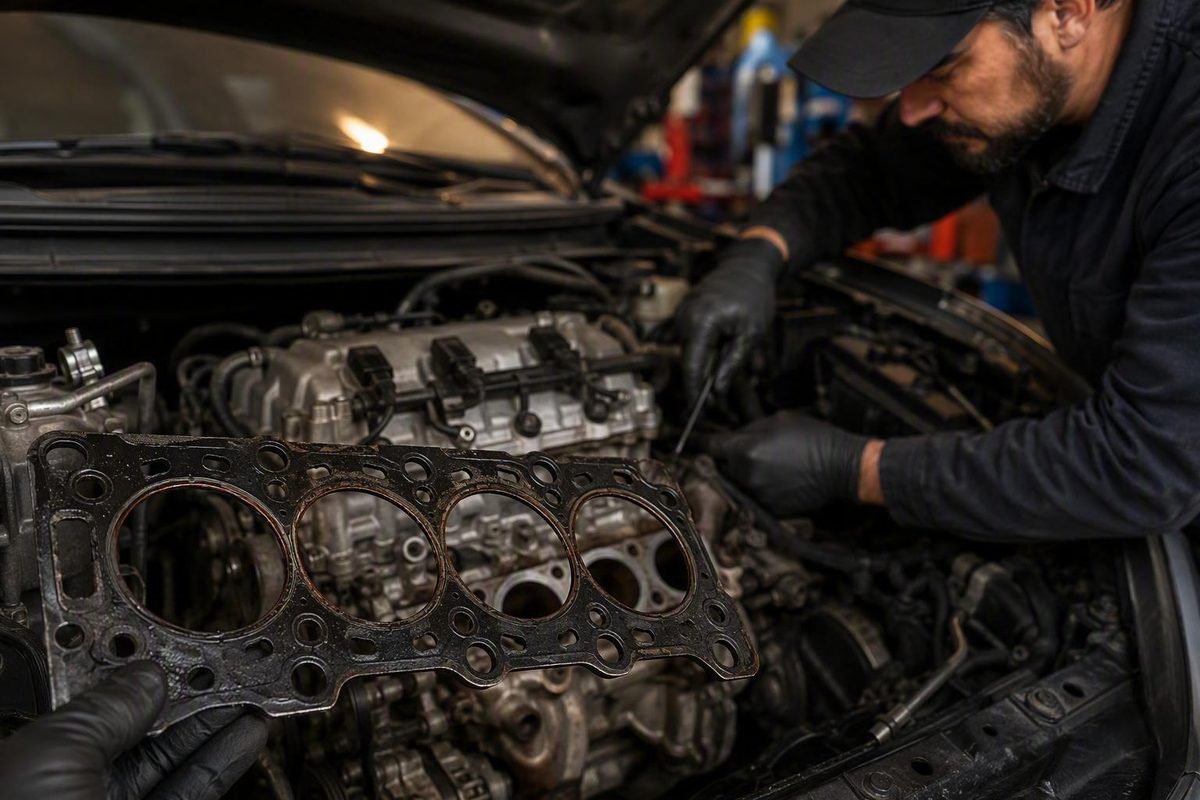
Check Honda head-gasket warranty coverage by model, year and mileage, then follow the misfire test order that can prevent a costly injector guess.
A misfiring Honda covered by the reported head-gasket warranty extension should get a combustion-leak test before anyone sells injectors or plugs. Since August 27, 2026, specified Honda and Acura vehicles reportedly have original head-gasket coverage for 10 years or 150,000 miles. A test costing up to $50 can therefore lead to a $0 covered repair instead of an unnecessary $1,100 injector job or an uncovered teardown approaching $4,000. The reported extension more than doubles Honda’s former 5-year/60,000-mile powertrain limit.
That verdict is limited to vehicles and failures covered by the applicable program. A matching model and mileage do not authorize a repair. The dealer must confirm the VIN, diagnose the specified condition and obtain any required authorization.
Why the Usual Misfire Advice Is Reasonable
The standard advice starts with plugs, coils and injectors because all three can cause Honda misfires. P0300 indicates random or multiple-cylinder misfire activity, while P0301 through P0304 identify activity associated with cylinders 1 through 4. Wiring faults, air leaks, fuel-delivery problems, compression loss and control faults can produce similar symptoms.
The old warranty economics also supported that approach. Honda’s reported standard powertrain warranty was 5 years or 60,000 miles, and Acura’s was 6 years or 70,000 miles. Once a vehicle was beyond those limits, owners often expected to pay for diagnosis and repair either way.
That consensus remains right about one point: a misfire code does not prove head-gasket failure. Plugs, coils and injectors still deserve testing when the evidence points toward them. What changed is the cost of guessing. Reported failures occurred from 61,000 to 130,000 miles, where many vehicles were outside the old warranty but can be inside the 10-year/150,000-mile extension. Honda described the issue as “reduced effectiveness of the original cylinder head gasket under certain driving conditions,” with misfiring and shaking sometimes initially attributed to injectors.
Choose the vehicle, mileage and symptoms; the checker compares coverage and diagnostic costs.
This is a screening tool, not warranty approval. The dealer must confirm the VIN, exact warranty start date and covered failure.
Test-first wins for this 2019 CR-V: it screens inside 10 years/150,000 miles and avoids a ~$1,100 injector guess.
Coverage screen: Likely inside the reported extension by model year and mileage. Matching reported bulletin: 26-016. Verify the VIN and in-service date.
Symptom read: A cylinder misfire plus unexplained coolant loss supports combustion-leak and coolant-intrusion testing before parts.
- Preserve the event. Save codes, misfire counts and freeze-frame data before clearing anything.
- Read the cylinder. Identify P0301–P0304, compare plugs and record cold-start behavior.
- Document coolant. Log additions, external leaks and temperature warnings.
- Test before parts. Use the combustion-leak screen; dealer testing may add pressure and borescope inspection.
- Verify the VIN. Ask which bulletin applies and who pays if the covered condition is not confirmed.
| Model | Years | Configuration | Bulletin / Limitation |
|---|---|---|---|
| Accord | 2018–2022 | 1.5T, CVT | 26-003 |
| Accord | 2018–2022 | 1.5T, manual | 26-004 |
| Accord | 2023–2026 | Exact scope — | 26-005; verify configuration |
| Accord Hybrid | 2018–2022 | Hybrid | 26-006 |
| Accord Hybrid | 2023–2026 | Hybrid | 26-007 |
| Civic | 2016–2021 | 1.5T, CVT | 26-008 |
| Civic / Si | 2016–2021 | 1.5T manual; Si 2017–2020 | 26-009 |
| Civic / Si | 2022–2026 | 1.5T, manual | 26-010 |
| Civic | 2022–2024 | 1.5T, CVT | 26-011 |
| Civic | 2025–2026 | 2.0, CVT | 26-012 |
| Civic Hybrid | 2025–2026 | Hybrid | 26-013 |
| CR-V | 2017–2022 | 1.5T | 26-016 |
| CR-V | 2023–2026 | 1.5T | 26-017 |
| CR-V Hybrid | 2020–2022 | Hybrid | 26-018 |
| CR-V Hybrid | 2023–2026 | Hybrid | 26-019 |
| Civic / Si | 2016–2017 | 1.5T manual; 2017 Si | 26-097; reported expiry May 31, 2027 |
| CR-V | 2017 | 1.5T | 26-098; reported expiry May 31, 2027 |
| Civic | 2016–2017 | 1.5T, CVT | 26-099; reported expiry May 31, 2027 |
| Acura ADX | 2025–2026 | Reported application | 26-001 |
| Acura Integra | 2023–2026 | CVT | 26-002 |
| Acura Integra | 2023–2026 | Manual | 26-003 |
Sources: third-party reports published by The Autopian and CarComplaints. Limits shown are 10 years/150,000 miles for most reported applications; VIN eligibility, diagnosis, reimbursement and exact terms remain subject to Honda or Acura confirmation. Costs are reported figures or user-entered quotes; incidence is unknown.
The Test Order That Protects the Warranty Claim
Start by preserving the evidence already stored in the car. Record all stored, pending and history codes before clearing anything. Save freeze-frame data showing engine temperature, load and operating conditions when the misfire set. Note whether the rough running happens only after a cold soak, while warm or under load.
Next, establish whether the misfire is cylinder-specific. P0301 through P0304 identify the cylinder the computer observed, not the failed part. Compare the plugs rather than replacing them immediately. A plug that differs sharply from the others can direct the next test, but it still does not by itself establish injector or gasket failure.
Then document coolant behavior. Record every addition, the approximate amount, visible external leakage and each temperature warning. A repeated cold-start misfire in one cylinder accompanied by unexplained coolant loss deserves a coolant-intrusion check before an injector purchase.
A chemical combustion-leak test is the inexpensive screening step in this sequence. A positive result supports investigating communication between the combustion chamber and cooling system. A negative result does not rule out every intermittent leak, so the dealer may still use cooling-system pressure testing and borescope inspection when the symptom pattern warrants it.
Third-party descriptions of the dealer workflow include misfire verification, pressure testing, borescope inspection and checks for warpage, cracking or related damage. An independent technician also described recording the VIN, mileage and inspection images for submission to Honda. The technician’s overview separates verification, pressure testing, cylinder inspection and damage checks.
Do not open a hot cooling system or improvise a pressurized test beyond the equipment’s instructions. Warranty diagnosis may also require the dealer to preserve specific images, measurements and findings.
Reported Models Still Require a VIN Check
The reported applications cover much of Honda’s high-volume 1.5-liter turbo and 2.0-liter hybrid range, plus specified Acura models. The detailed third-party list identifies the following bulletins. CarComplaints published the applications, bulletin numbers and special deadline.
| Model | Years | Configuration | Bulletin |
|---|---|---|---|
| Accord | 2018–2022 | 1.5T CVT | 26-003 |
| Accord | 2018–2022 | 1.5T manual | 26-004 |
| Accord | 2023–2026 | Exact scope unconfirmed | 26-005 |
| Accord Hybrid | 2018–2022 | Hybrid | 26-006 |
| Accord Hybrid | 2023–2026 | Hybrid | 26-007 |
| Civic | 2016–2021 | 1.5T CVT | 26-008 |
| Civic/Si | 2016–2021 | 1.5T manual | 26-009 |
| Civic/Si | 2022–2026 | 1.5T manual | 26-010 |
| Civic | 2022–2024 | 1.5T CVT | 26-011 |
| Civic | 2025–2026 | 2.0 CVT | 26-012 |
| Civic Hybrid | 2025–2026 | Hybrid | 26-013 |
| CR-V | 2017–2022 | 1.5T | 26-016 |
| CR-V | 2023–2026 | 1.5T | 26-017 |
| CR-V Hybrid | 2020–2022 | Hybrid | 26-018 |
| CR-V Hybrid | 2023–2026 | Hybrid | 26-019 |
| ADX | 2025–2026 | Reported application | 26-001 |
| Integra | 2023–2026 | CVT | 26-002 |
| Integra | 2023–2026 | Manual | 26-003 |
The 2023–2026 non-hybrid Accord entry is not described precisely enough in the supplied evidence to assign a definite engine or transmission. Do not treat every Accord in that range as covered.
Older Civic and CR-V applications also appear under bulletins 26-097, 26-098 and 26-099, reportedly expiring May 31, 2027. A six-month grace period has been reported for certain vehicles excluded solely because of age, but the available material does not establish which event must happen before the deadline. Owners should ask whether the controlling event is the appointment, diagnosis, authorization, claim submission or completed repair.
No model table can establish VIN eligibility. Engine family, model year and mileage only screen the possibility. A dealer’s manufacturer system must identify which bulletin, if any, controls the specific VIN.
How to Get a Definite Coverage Answer
Record the 17-character VIN directly from the car or registration, along with current mileage, engine, transmission and original in-service date if known. The exact warranty start date matters near the 10-year boundary; the available reports do not settle whether Honda’s controlling language uses the original sale, purchase or first in-service date.
Honda’s MyGarage interface accepts year, model and trim or a VIN, although the supplied capture produced an error rather than a vehicle-specific result. A blank search therefore does not prove exclusion. Check Honda’s consumer warranty-search page, then request an authorized dealer’s VIN-status or warranty inquiry.
Ask the dealer this directly:
“Can you check whether this VIN is included in the cylinder-head-gasket warranty extension and identify the bulletin that applies?”
Have the adviser distinguish “VIN not eligible” from “VIN eligible, but no covered failure diagnosed.” The extension is reportedly diagnosis-dependent, not a preventive replacement campaign. A vehicle can be eligible without currently qualifying for a repair.
Before authorizing work, obtain written answers covering the initial diagnostic charge, teardown authorization, responsibility for reassembly if coverage is denied and the dollar threshold at which the dealer must stop for approval. VIN inclusion establishes potential coverage; it does not establish which component failed or who pays if another cause is found.
Canada’s Q79 Campaign Is a Separate Action
Honda Canada’s Q79 product-update campaign was reported for 2025–2026 Civic Hybrid, 2023–2025 Accord Hybrid and 2023–2026 CR-V Hybrid vehicles. Its initial remedy was a software recalibration changing cooling-system operation. The Canadian applications and software-based remedy were reported separately.
Q79 does not establish eligibility under the reported U.S. warranty extension. The two actions have different markets, VIN populations, remedies and authorization rules. A Canadian calibration campaign cannot be used as proof that a U.S. vehicle receives the same update or warranty benefit.
What Happens After Coolant Intrusion Is Confirmed
Reported dealer procedures call for replacement of the cylinder-head gasket when testing confirms coolant intrusion associated with the covered condition. The dealer may have to submit images, measurements or other records before beginning the repair.
If inspection finds qualifying warpage or related damage, reports say cylinder-head or short-block replacement may be considered. That does not mean every leaking gasket receives a new head, short block or complete engine. The approved repair depends on the bulletin, documented damage and Honda’s authorization.
Keep five decisions separate: VIN eligibility, diagnostic confirmation, repair authorization, approved work and classification of covered versus customer-pay items. Ask for an itemized decision covering diagnostic labor, teardown, gasket, fasteners, fluids, seals, machining, related engine damage, towing and rental transportation. The available evidence does not establish that every ancillary item is automatically paid.
The reports also do not establish that Honda redesigned the replacement gasket, changed fasteners or torque procedures, or guaranteed a permanent cure. The reported explanation identifies reduced gasket effectiveness under certain driving conditions but does not authenticate broader theories about boost, fuel octane, head-bolt stretch, thermal cycling or driving style.
The Financial Difference Is Diagnosis, Not a Free Repair Promise
Owner reports cited estimates of roughly $4,000 to $5,500 for uncovered head-gasket work, sometimes with separate teardown charges or partial goodwill assistance. Those figures are anecdotes, not standard prices. No reliable failure rate is available, so an honest expected-cost calculation cannot assign a probability that any particular misfire is a gasket failure.
The useful comparison is conditional: if the gasket is the cause and the vehicle qualifies, a $0–$50 test-first path can lead to a covered repair. Replacing approximately $1,100 in injectors first burns that money without addressing coolant intrusion. If testing instead points to an injector, plug or coil, the consensus diagnosis wins and the evidence supports that repair.
For a previously paid repair, preserve the final invoice, repair mileage, diagnosis, codes, test findings, parts list, labor operations and proof of payment. The supplied evidence does not establish reimbursement eligibility, a filing deadline, approved labor rates or whether independent-shop work qualifies.
Transferability is also unresolved in the available material. A used-car buyer should not rely on a seller’s statement that the engine “has a 150,000-mile warranty.” Request a written VIN-status inquiry showing the applicable bulletin, warranty start date and remaining time or mileage.
The extension changes the order of operations, not the need for diagnosis: preserve freeze-frame data, identify the misfiring cylinder, document coolant loss, run the inexpensive combustion-leak screen and let the dealer verify the VIN before authorizing parts or teardown.